There are thousands of bags in the world, but only five types that actually matter. Understanding what each one does, what it signals, and what problem it solves is the difference between a wardrobe of impulse buys and a collection that works for life.
Here are the five types of handbags every woman should own — and exactly what makes each one irreplaceable.
The 5 Essential Handbag Types at a Glance
Each type fills a different role. None is redundant. Together, they give you a complete answer for every situation.
- The Structured Tote — High capacity with a polished silhouette; the everyday workhorse
- The Bucket Bag — Relaxed, effortlessly cool; in continuous fashion relevance since the 1930s
- The Top-Handle — Intentional and formal; the silhouette of the world’s most iconic designer bags
- The Crossbody — Hands-free mobility without sacrificing polish
- The Clutch — The most formal option; small, focused, and powerful in its constraint
Type 1: The Structured Tote
The structured tote is the workhorse with a poker face. It carries everything — laptop, lunch, gym kit, the book you keep meaning to start — while looking like it’s carrying nothing at all. The critical word is structured: a tote that collapses into itself defeats the purpose. You want clean lines, a firm base, and handles that sit properly on the shoulder without sliding.
What makes the structured tote different from other types of handbags is its sheer capacity combined with its polished silhouette. It’s the only bag you can take from Monday morning to Friday without anyone questioning whether you’re trying hard enough.
Classic examples include the Celine Cabas, the Louis Vuitton Neverfull, and the Prada Galleria — each a structured tote that became a category benchmark for the same reason: they carry a lot and look like they’re not trying.
- Best for — Work, travel, any day where life requires everything
- Key feature — Volume with visual discipline
- Price range — $300–$600 for quality non-designer; $1,500–$3,000 for mid-tier designer; $2,000+ for Louis Vuitton, Celine, or Prada
Type 2: The Bucket Bag
The bucket bag is the most effortlessly cool handbag style in existence — and it has been that way since the 1930s. The shape — cylindrical, open or drawstring-top, slightly slouchy — has an ease that structured bags can’t replicate. It moves with you rather than against you.
Louis Vuitton’s Noé bucket bag, introduced in 1932 to carry champagne bottles, became one of the most imitated handbag silhouettes in fashion history. That single design decision — build a bag around what it actually needs to do — tells you everything about what a well-designed bucket bag achieves.
More recent iterations include the Bottega Veneta Pouch and the Loewe Hammock — bags that share the bucket’s relaxed logic even when they don’t share the cylindrical form. The defining quality of this category is comfort with itself.
- Best for — Weekends, evenings, any occasion that calls for personality over polish
- Key feature — Relaxed confidence that structured bags can’t replicate
- Price range — $250–$500 for quality non-designer; $1,500–$4,000 for designer versions
Type 3: The Top-Handle
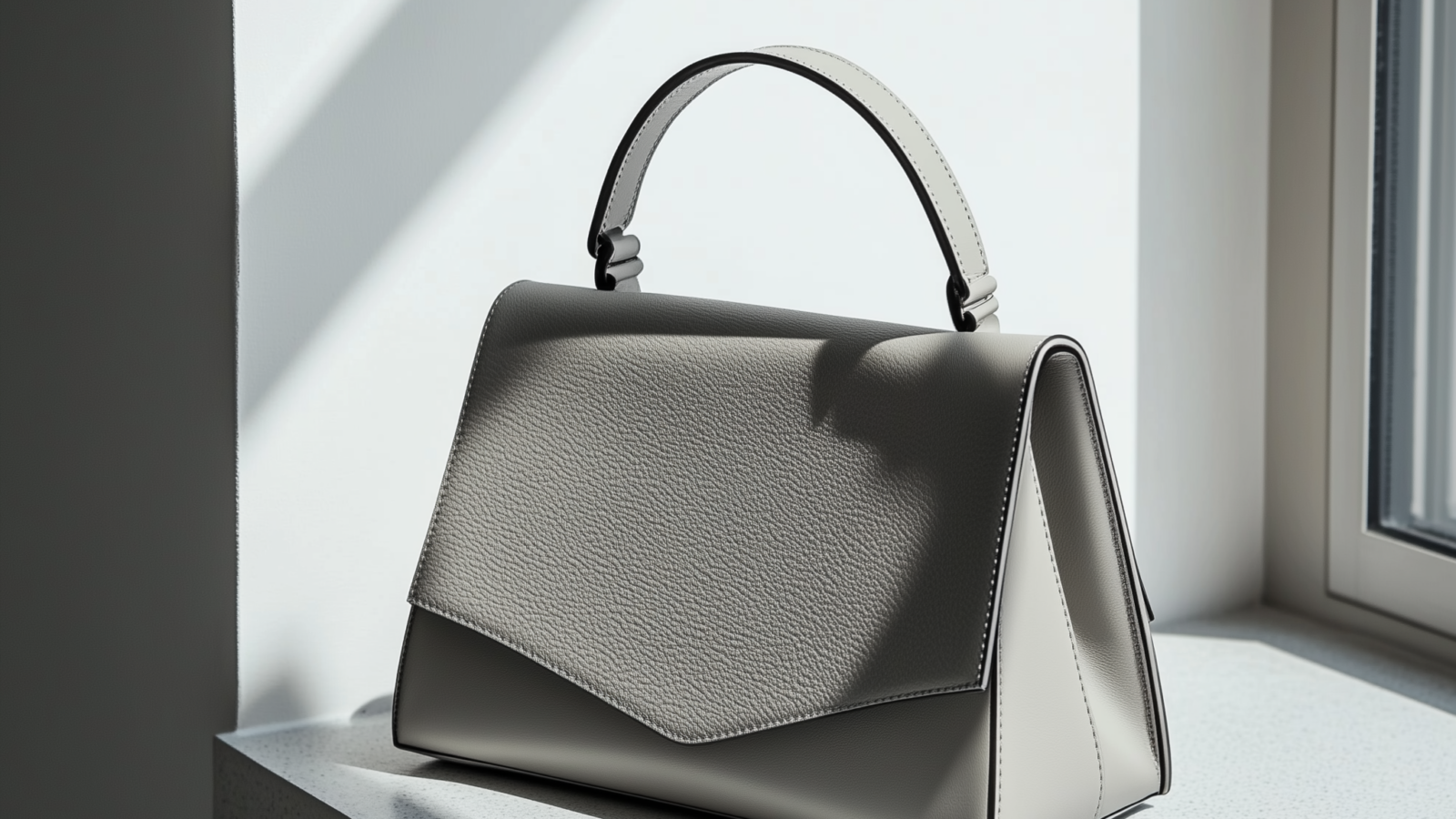
Among all the types of handbags, the top-handle is the most intentional. You have to hold it — in the crook of your arm or gripped in one hand — which means you’re making a choice every time you pick it up. That deliberateness is the entire point. The top-handle signals that you dressed with care. It completes an outfit rather than disappearing into one.
Designer houses have long understood this. The Hermès Kelly (designed 1935), the Dior Lady Dior (1994), and the Chanel Classic Flap are all built around top or dual handles. There’s a reason the world’s most iconic handbag silhouettes favour this form: holding a bag communicates intention in a way that hanging one from your shoulder doesn’t.
- Best for — Dinners, events, any occasion where the bag is part of the look
- Key feature — Visual intentionality; it completes an outfit rather than accessorising it
- Price range — $500–$1,000 for quality non-designer; $2,000–$15,000+ for designer versions
Type 4: The Crossbody
Freedom. That’s the only word for a well-chosen crossbody bag. Hands free, weight distributed, nothing sliding off your shoulder mid-stride. The crossbody is often dismissed as the casual option among handbag styles — that’s a failure of imagination. A sleek leather crossbody in the right proportions is as polished as anything in this list.
Scale is everything: too large and it overwhelms, too small and it reads as a novelty. The ideal daily crossbody sits between 20 and 28 centimetres wide — large enough to carry daily essentials, small enough to stay proportionate on most body types.
- Best for — Travel, city days, any situation that demands mobility without sacrifice
- Key feature — Hands-free carry at any formality level
- Price range — $150–$400 for quality non-designer; $1,500–$4,000 for Saint Laurent, Celine, or Bottega Veneta
Type 5: The Clutch
The clutch is the only handbag style that forces a real question: what do I actually need? Phone, card, lip balm. That’s it. There’s something clarifying about that edit. The clutch also changes your posture — you hold it, tuck it under your arm, carry it in your hand. It makes you stand differently. Better, usually.
Among all handbag styles, the clutch is the most purely formal — and the most powerful precisely because of its constraint. The Bottega Veneta Pouch redefined the clutch category in 2019 by applying the Intrecciato weave to an oversized pillow-soft form. The Chanel WOC splits the difference between a clutch and a crossbody. Both illustrate that “clutch” is a broader design category than it first appears.
- Best for — Evenings, events, occasions where the point is the occasion itself
- Key feature — Maximum impact with minimum carry
- Price range — $80–$300 for quality non-designer; $800–$5,000 for designer options
How to Build Your Handbag Collection
If you’re starting from zero: lead with the crossbody — it handles more situations than anything else. Add the structured tote when life demands it. Bring in the top-handle when you want to mean business. The bucket and the clutch come later: they’re personality, not foundation.
The order matters because it keeps you from buying aspirational pieces before you’ve covered functional ones. A $4,000 clutch you carry once a year is a luxury. A $300 crossbody you carry every day is infrastructure. Build the infrastructure first.
Once you have all five types of handbags, you have an answer for every room you’ll ever walk into.
If you’re deciding between a tote and a shoulder bag specifically, our dedicated comparison — tote bag vs shoulder bag — breaks down the practical differences in capacity, structure, and wear.
Frequently Asked Questions
Q: What are the five essential handbag types every woman should own?
The five essential handbag types are the structured tote, the bucket bag, the top-handle bag, the crossbody bag, and the clutch. Each solves a different problem: the tote provides daily capacity, the bucket offers relaxed style, the top-handle commands formal occasions, the crossbody delivers hands-free mobility, and the clutch serves evenings and events.
Q: Which type of handbag is the most versatile?
The crossbody bag is generally the most versatile handbag type. It transitions from casual to smart-casual with ease, keeps hands free, and works across sizes from compact to mid-sized. It is usually the recommended first purchase for anyone building a handbag collection from zero.
Q: What type of handbag is best for work?
The structured tote is the best handbag type for work. It carries the most — including a laptop, documents, and daily essentials — while maintaining a polished appearance that reads as professional in any environment. Look for one with at least one interior zip pocket and a firm base.
Q: How many handbags does a woman actually need?
You need as many handbag types as you have distinct contexts in your life. Most women with varied routines benefit from at least three: a tote for high-capacity days, a crossbody for practical mobility, and a top-handle or clutch for evenings. The bucket and clutch add personality and formal coverage once the foundations are in place.
Q: What is a top-handle handbag?
A top-handle handbag is a bag designed to be carried in the hand or in the crook of the arm via a short handle positioned on the top of the bag. It is typically structured and formal in character. The Hermès Kelly, the Dior Lady Dior, and the Chanel Classic Flap are among the most iconic top-handle bag designs ever produced.
Leave a Reply