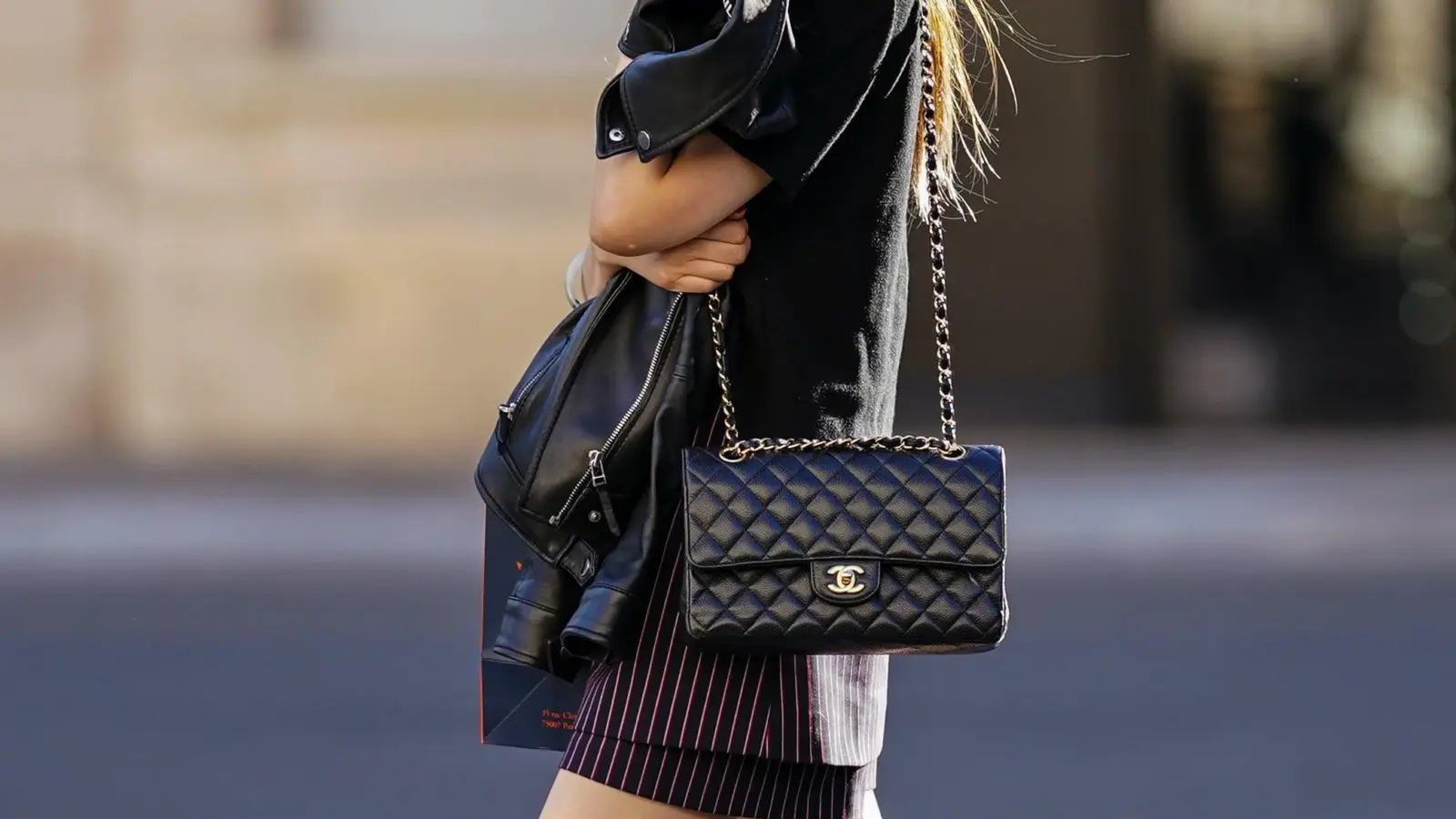
The Chanel flap bag has been in continuous production since 1955. Most fashion has a shelf life measured in seasons. This bag has outlasted generations of trends, economic cycles, and complete shifts in how women dress. That’s not a trend. That’s architecture.
Understanding why the Chanel flap bag endures requires looking past the logo and into the design decisions that made it extraordinary from day one.
The History of the Chanel Flap Bag
The Classic Flap regularly appears alongside the Birkin and Kelly in any credible ranking of fashion’s greatest bags. See our ranking of the most iconic handbags of all time for the full list.
In 1955, Gabrielle Chanel introduced a bag that did something radical: it had a shoulder strap. Women at the time carried handbags held in the hand or the crook of the arm. Chanel looked at that convention and saw a problem. She wanted her hands free. So she added a chain.
The bag that resulted — initially called the 2.55 after its February 1955 debut — was quilted, borrowing the crosshatch pattern from the padded jackets worn by French sportsmen and workers. Chanel had a long habit of taking working-class utility and elevating it until it became the definitive luxury object. The 2.55 was her masterclass.
After her death, Karl Lagerfeld redesigned it in the 1980s, swapping the original Mademoiselle lock for the interlocking CC clasp we recognise today. That version became the Chanel Classic Flap. Both versions exist. Both are correct. Understanding this distinction is the starting point for anyone serious about the Chanel flap bag.
Why the Chanel Flap Bag’s Proportions Work
The Chanel flap bag holds its ground in every era because of geometry. The rectangular silhouette with softly rounded corners hits a proportion — roughly 2:1.3 — that the human eye finds naturally pleasing. The quilting creates an internal grid that draws the eye across the bag’s surface without overwhelming the overall shape. The chain strap adds a vertical element that breaks the horizontal dominance of the flap without creating visual competition.
The result is a bag that works in almost any context. Against a minimal outfit, the Chanel flap bag adds structure. Against a complex outfit, it holds its own without fighting. A bag that succeeds in both situations is extraordinarily rare in design terms — and it’s the primary reason this silhouette has not been retired in 70 years.
The Hardware That Makes the Chanel Flap Bag Work
The interlocking CC clasp is not decorative branding — it’s a functional and visual decision that has been studied and imitated for forty years. Positioned at the centre of the bag’s front face, it creates a focal point that anchors the eye and gives the composition its balance.
The chain strap of the Chanel flap bag is equally considered. Pure metal chains are cold, they slip on the shoulder, and they mark fabric. The leather-woven chain — a Chanel signature from 1955 — solves all three problems. It’s a small piece of industrial design that took decades to become standard luxury practice. The Chanel flap bag combination of CC clasp and woven chain is what makes the bag instantly identifiable at a distance without a single word of text on the exterior.
Chanel Flap Bag Sizes: Which to Choose
The Chanel Classic Flap is produced in five standard sizes. Each has its own proportions and intended use.
- Mini (19 × 13cm) — The smallest Classic Flap; worn crossbody; holds a phone, card, and one key. Popular as an evening or secondary bag.
- Small (25 × 16cm) — The most popular size globally. Carries daily essentials while maintaining elegant proportions.
- Medium/Large (26 × 16cm) — The definitive version; the size most people envision when they picture the Classic Flap.
- Jumbo (30 × 20cm) — Most practical size; fits a phone flat, a small wallet, and a few extras without distorting the silhouette.
- Maxi (33 × 22cm) — The largest production size; primarily a statement piece.
There is also the 2.55, Gabrielle Chanel’s original 1955 design, with its burgundy interior and Mademoiselle lock. The 2.55 is produced in a similar size range to the Classic Flap but with different hardware details and a subtly softer silhouette.
Chanel Flap Bag Price: What to Expect in 2026
The Chanel Classic Flap has increased in retail price consistently since 2019, with particularly significant increases between 2021 and 2024. Current retail pricing varies by size and leather.
- Mini Classic Flap — Approximately $4,500–$5,500
- Small Classic Flap — Approximately $6,500–$7,500
- Medium/Large Classic Flap — Approximately $8,500–$10,500
- Jumbo Classic Flap — Approximately $9,500–$11,500
Prices vary by region and hardware choice. Both the Classic Flap and the 2.55 retain strong resale value — pre-owned examples in excellent condition regularly sell at or above retail for popular sizes, making the Chanel flap bag one of the most consistently discussed luxury bag investments in the secondary market.
Why the Chanel Flap Bag Became a Symbol
The Chanel flap bag’s cultural staying power comes from what it deliberately doesn’t do. It doesn’t shout. It carries no excessive hardware, no all-over branding, no silhouette that reads from fifty feet. You have to look at it properly to fully read it — and that restraint is exactly what makes it aspirational across generations.
It belongs to no particular decade because it was never fully of any decade. The women carrying it in 2026 aren’t carrying nostalgia. They’re carrying something that still solves the original problem — elegance, function, freedom — better than almost anything made since.
Frequently Asked Questions
Q: What is the difference between the Chanel 2.55 and the Classic Flap?
The 2.55 is the original 1955 design by Gabrielle Chanel, with a burgundy interior, Mademoiselle lock (a rectangular turn-lock), and a slightly softer silhouette. The Classic Flap is Karl Lagerfeld’s 1980s redesign, with the interlocking CC clasp and a more structured shape. Both are in current production.
Q: How much does a Chanel Classic Flap bag cost?
Current retail prices for the Chanel Classic Flap range from approximately $4,500 for a Mini to $11,500 for a Jumbo, depending on size, leather, and hardware. Prices have increased significantly since 2019. Well-maintained pre-owned Classic Flap bags often sell at or above retail in the secondary market.
Q: Which size Chanel Classic Flap is the best?
The Medium/Large is the most iconic and widely purchased size. It is the version most people picture when they think of the Chanel Classic Flap. The Small is preferred for more casual use, while the Jumbo offers greater practicality. The right choice depends on your proportions and what you typically carry.
Q: Is the Chanel flap bag a good investment?
The Chanel Classic Flap is widely considered one of the most reliable luxury handbag investments. Its retail price has increased by approximately 70% between 2019 and 2024, and well-maintained pre-owned examples consistently hold or exceed those values in the secondary market across all standard sizes.
Q: What leather is the Chanel Classic Flap made in?
The Chanel Classic Flap is most commonly produced in caviar leather (pebbled calfskin — durable, scratch-resistant) and lambskin (smooth calfskin — softer, more supple but more prone to marks). Caviar is recommended for daily use; lambskin is preferred for its luxurious feel and is better suited to careful use or special occasions.
Leave a Reply