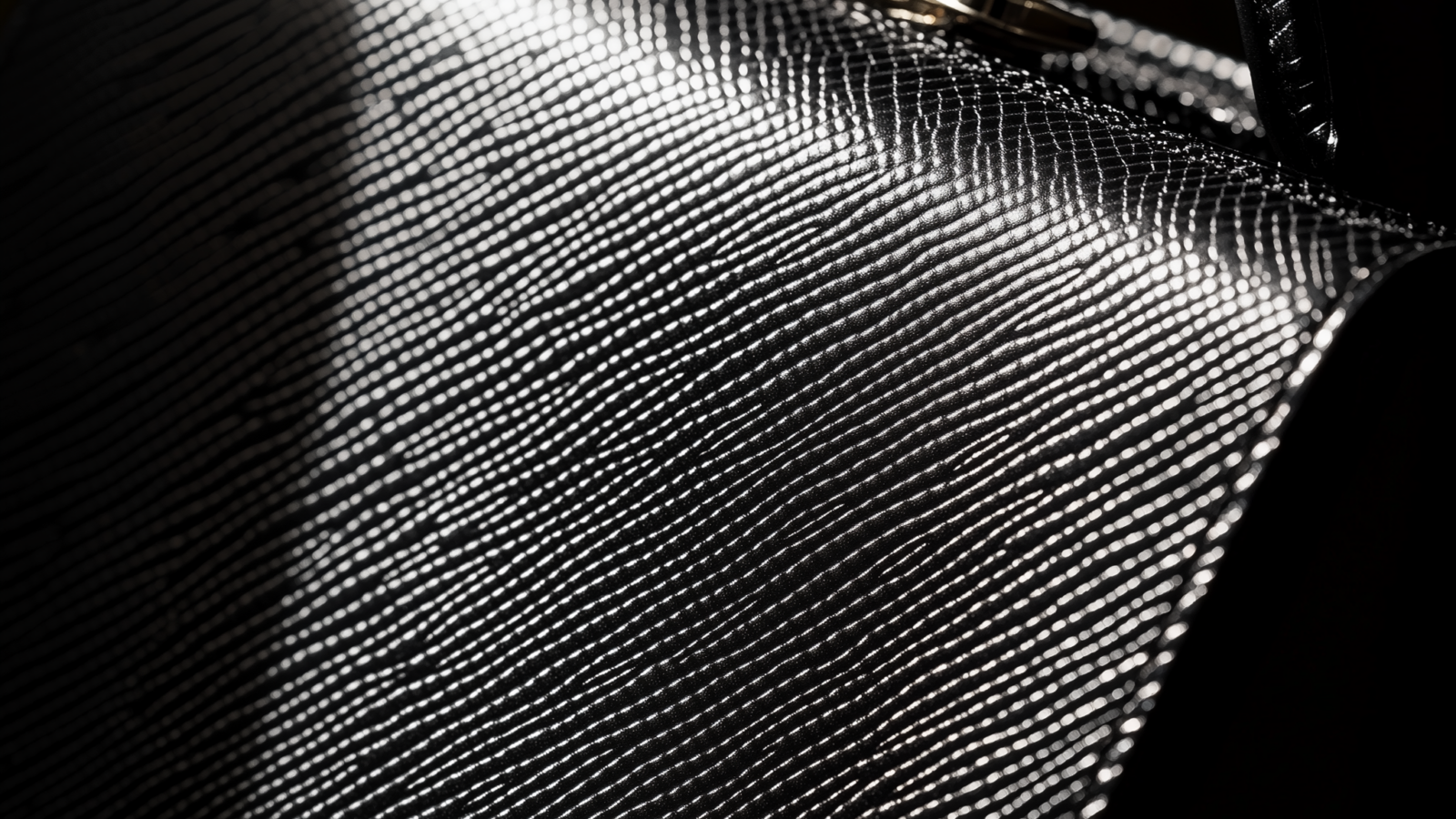
Run your finger across a saffiano leather handbag and you’ll feel it immediately — a fine, precise crosshatch pattern pressed into the surface, firm beneath your fingertip, almost like touching a very refined grid. It’s one of the most recognisable textures in luxury accessories, and one of the most practical. But most people carrying a saffiano leather handbag couldn’t tell you what it is, where it came from, or why it performs the way it does.
Here’s everything worth knowing.
Where Saffiano Leather Came From
Saffiano leather was patented by Mario Prada in 1913. That date is worth sitting with: over a century ago, the founder of one of fashion’s most enduring houses locked down a finishing technique that would go on to define an entire category of the luxury handbag market.
The name has murky etymological roots — likely derived from the Spanish chagrín or the Turkish saǧrı, both referring to textured leathers historically produced from horse or shark skin. What Prada developed was different: a process of pressing a crosshatch pattern into calf leather using a heated wax finish, creating a surface that was both visually distinctive and, critically, highly functional.
For decades the saffiano leather handbag was largely a Prada signature. Then the technique was licensed, and saffiano spread across the luxury market. The association with Prada remains strong — the Prada Saffiano Lux tote and the Galleria are considered benchmarks for the material — but saffiano now belongs to the wider world of premium handbag manufacturing. Brands including Furla, Longchamp, Coach, Kate Spade, and at the ultra-luxury end, some Celine and Balenciaga designs have all incorporated the finish.
What Makes a Saffiano Leather Handbag Different
The crosshatch embossing on a saffiano leather handbag isn’t purely decorative. The wax coating applied during the finishing process creates a surface that resists scratches, repels water, and holds its structure under pressure. This is what separates saffiano from smooth calfskin or pebbled leather in practical terms.
Smooth leather is beautiful and develops a rich patina over time — but it shows every scratch, pen mark, and raindrop. A saffiano leather handbag largely doesn’t. The crosshatch pattern effectively disguises minor abrasions: a mark that would be immediately visible on smooth leather disappears into the texture. The wax coating causes liquids to bead on the surface rather than being absorbed into the material.
For a bag that lives in the real world — thrown onto chairs, caught in summer rain, pushed into overhead compartments — this performance advantage matters significantly.
How to Identify Genuine Saffiano Leather
A genuine saffiano leather handbag has a very specific set of characteristics.
- Texture — Rigid rather than soft; consistent diagonal crosshatch grid running in two directions to create a diamond or square pattern
- Structure — Does not slouch; does not stretch; holds its shape completely when lifted
- Surface sheen — A quiet luminosity from the wax finish — not high gloss, but a restrained shine that catches light directionally
- Temperature — Cooler to the touch than untreated leather, because the wax creates a slight barrier
- Feel — Firm and slightly rigid; if it feels warm and soft like natural leather, it is likely a coated synthetic
Saffiano Leather vs Other Leather Types
Against smooth calfskin: The saffiano leather handbag is more durable and lower maintenance. Calfskin is softer, more tactile, and develops a patina that tells a story. Choose calfskin if you want a bag that changes beautifully over time; choose saffiano if you want one that looks the same in ten years as it did on the day you bought it.
Against pebbled leather: Both textures hide scratches effectively. Pebbled leather is softer and more relaxed in feel — it reads as casual-luxury. Saffiano is firmer and more precise — it reads as formal-luxury. The same handbag design in pebbled versus saffiano leather will serve a noticeably different occasion.
Against patent leather: Patent has a high-gloss finish that is visually dramatic but practically unforgiving — every mark shows, and the material can crack over time. Saffiano’s matte-to-satin finish is more forgiving in every respect and ages far better.
Saffiano Leather Handbag Prices
A quality saffiano leather handbag from a mid-tier brand like Furla or Longchamp starts from around $200–$400. The Prada Saffiano Lux tote — the brand’s flagship saffiano model — starts from approximately $1,200, while the Prada Galleria in saffiano ranges from $2,000 to $3,500 depending on size. Coach and Kate Spade offer saffiano options in the $250–$600 range that deliver the material’s practical benefits at accessible price points. At the ultra-luxury end, Celine and some Balenciaga designs featuring saffiano-finish leather run from $2,500 and above.
How to Care for a Saffiano Leather Handbag
Beyond the leather itself, the hardware on a saffiano bag — its zips, clasps, and feet — is a key quality indicator. Our guide to handbag hardware: gold vs silver explains what to look for and how finish quality varies across price tiers.
This is where the good news arrives: the saffiano leather handbag is the easiest luxury leather to maintain.
For routine cleaning, a dry microfibre cloth handles most surface dirt. The wax finish means grime sits on top of the leather rather than penetrating it — a gentle wipe is usually sufficient. For deeper cleaning, a slightly damp cloth works without risk. Avoid soaking the leather or using harsh chemical cleaners, which can strip the wax coating and dull the finish.
Unlike smooth leather, a saffiano leather handbag doesn’t require regular conditioning to prevent cracking — the wax coating handles that function automatically. This makes it significantly lower maintenance than most other luxury leather types.
Store your saffiano leather handbag away from prolonged direct sunlight. Despite the material’s impressive durability, extended UV exposure will fade the colour of any leather over time.
For a complete comparison of how saffiano performs against other luxury materials, see our canvas vs leather guide. Our complete leather care guide covers conditioning schedules and cleaning methods that apply equally to genuine saffiano as to smooth and pebbled leathers.
Why the Saffiano Leather Handbag Remains a Benchmark
A century after Mario Prada’s 1913 patent, saffiano endures for one simple reason: it solves real problems without sacrificing aesthetics. It looks precise and intentional. It performs better than most alternatives in daily use. And it’s consistent — the structured quality of saffiano means two handbags made in the same colour will look nearly identical years apart, which matters if you’re building a wardrobe with staying power.
In a market full of materials that promise more than they deliver, the saffiano leather handbag is the rare luxury object that genuinely earns its reputation.
Frequently Asked Questions
Q: What is saffiano leather?
Saffiano leather is a type of leather finished with a crosshatch pattern pressed into its surface using a heated wax process, originally patented by Mario Prada in 1913. The wax coating makes it highly scratch-resistant and water-repellent, while the crosshatch pattern creates a distinctive, precise textured appearance.
Q: Is saffiano leather real leather?
Genuine saffiano is real calfskin leather that has been finished with a crosshatch embossing and wax coating. There are also synthetic saffiano alternatives — sometimes called saffiano PVC — which use the same pattern on a plastic base. Genuine saffiano leather is firmer, cooler to the touch, and more expensive than the synthetic version. If it feels warm and soft, it is likely not genuine saffiano.
Q: Which brands make the best saffiano leather handbags?
Prada is considered the benchmark for saffiano leather handbags, as the house holds the original 1913 patent and continues to define the category. Other brands producing quality saffiano bags include Furla, Longchamp, Coach, and Kate Spade. At the luxury tier, some Celine and Balenciaga designs have also featured saffiano-finish leather.
Q: How do you clean a saffiano leather handbag?
The standard cleaning method is a dry microfibre cloth for routine maintenance. For more persistent marks, a slightly damp cloth works without risk of damage. Avoid harsh chemical cleaners or soaking the leather. Unlike smooth leather, saffiano does not require regular conditioning — the wax coating handles moisture protection automatically.
Q: Does saffiano leather scratch easily?
Saffiano leather is one of the most scratch-resistant leather types available. The crosshatch pattern effectively conceals minor surface abrasions that would be clearly visible on smooth leather. The wax coating adds a further layer of protection. For everyday use, saffiano leather is significantly more durable than most smooth or pebbled alternatives.
Leave a Reply